
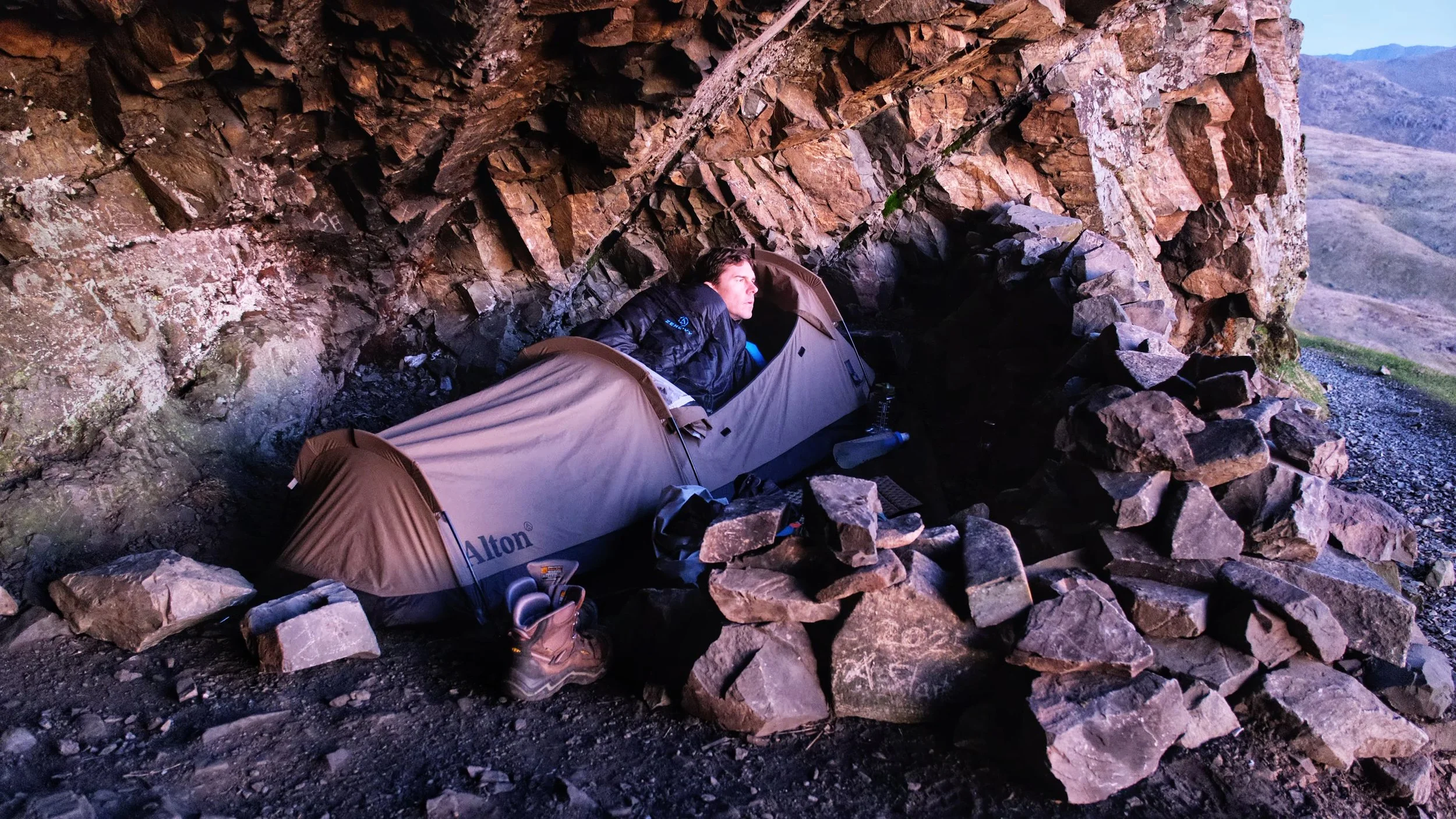
ZenBivy Light Bed: A Dream Sleep System for Side and Stomach Sleepers
Introduction:
The Zenbivy Light Bed is a premium backpacking sleep system designed to deliver the comfort of a traditional bed while maintaining the weight savings and packability of a lighter weight quilt. Unlike conventional mummy bags, the Light Bed utilizes a unique quilt, fitted sheet, and hood system that integrates with your sleeping pad. This design minimizes drafts while allowing for unrestricted movement and natural sleeping positions, creating a sleep experience that feels far more like your bed at home than a restrictive sleeping bag. But is the Zenbivy Light Bed the right sleep system for you?
In this review, I'll take an in-depth look at the complete Zenbivy Light Bed system, including its design, comfort, warmth, weight, and durability. I'll cover both the -12°C (10°F) and -4°C (25°F) Light Quilts with their corresponding hoods, as well as the Zenbivy Flex Air Mattress and the original Zenbivy SoftTop Pillow, to determine how the system performs in real-world backpacking conditions.
Specifications
• Temperature rating:
Light Quilt: -12°C (10°F) limit / -7°C (20°F) comfort
Light Convertible Quilt: -4°C (25°F) limit / 2°C (35°F) comfort
Flex Air Mattress: 4.8 R Value
• Quilts Insulation: 800FP HyperDRY™ Duck Down (90/10 grey duck down), water - resistant treatment (PFAS-free)
• Weight
Large Quilt -12°C: 1.07 kg (2 lb 6 oz)
25” Light Sheet (hood) -12°C : 246 g (8.68 oz)
Large Convertible Quilt -4°C: 793 g (1 lb 12 oz)
Flex Air Mattress 25x78 Tapered: 709 g (1 lb 9 oz)
• Fabrics:
Liner: 25D Polyester Pongee, coating-free, cire, DWR-free, 47 gsm
Shell: 15D Nylon Taffeta, coating-free, cire, C0 DWR (PFAS-free), 33 gsm
• Recommended stuff sack:
All -4ºC Down:4L - 7L (with pillow)
All -12ºC Down: 15L (with pillow and hood)
⸻
Performance Breakdown
1.Design and Features – 9.5/10
Quilt-based system instead of a sleeping bag
The Light Bed replaces the typical zipper mummy bag with a top quilt that clips to a fitted sheet that is attached to your sleeping pad. Not only does this allow for much more freedom of movement while you are sleeping, but it also eliminates the need for down insulation and fabric underneath your body that just gets compressed becoming less effective at keeping you warm.
Advantages:
•No restrictive mummy shape allowing for greater freedom of movement
•Reduced drafts compared to typical backpacking quilts
•Easier venting in warm temperatures
The light convertible quilt also has the advantage of being able to become completely flat like a comforter, which is great in warmer weather or if you just want to use it as a blanket around camp.
Integrated hood
Traditional quilts lack a hood, but the ZenBivy sheet includes a large wide hood attached to the pad sleeve with integrated clips to attach the pillow. This is a game changer for side and stomach sleepers. Unlike a traditional mummy bag this allows you to easily tuck a single arm or both arms under your pillow, which is much more comfortable when sleeping on your side and stomach. This is virtually impossible to comfortably do in a traditional mummy bag. In addition, because the hood is oversized, you can even store fuel canisters or camera batteries inside the hood when it’s cold out, making them easily accessible while keeping them warm while you sleep.
Benefits:
• Keeps your head insulated without turning the quilt into a mummy bag
• Allows side sleepers to move freely and sleep more naturally without your face covered by a small hood
• Works very well with backpacking pillows keeping them in place. The Zenbivy pillow actually has two clips that secure it in place while still allowing you to wrap your arms around or under it.
• Larger space to store gear that you would like to keep warm
This oversized hood is one of my favorite features of the ZenBivy system!
Draft-free clip system and versatility
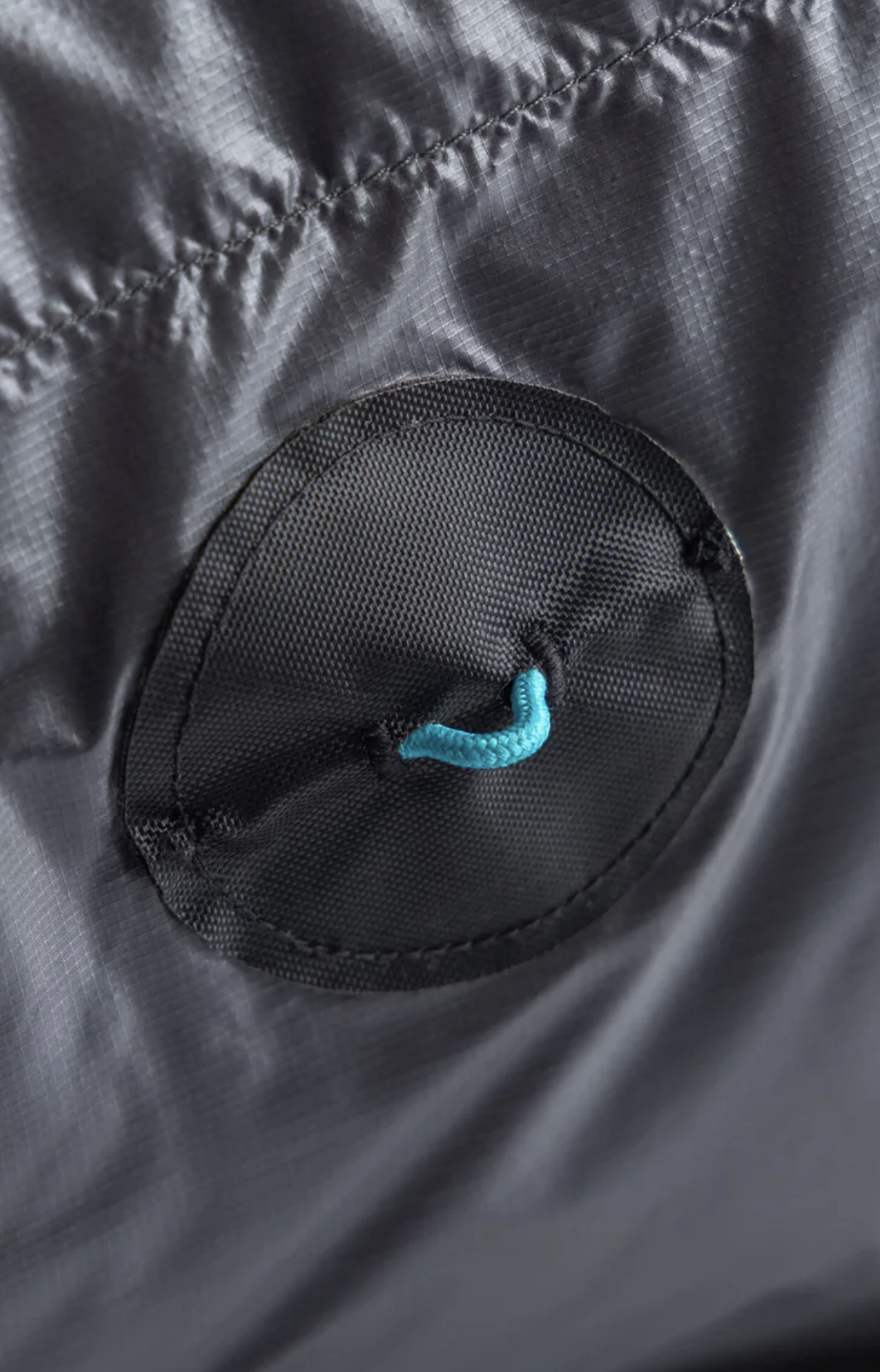
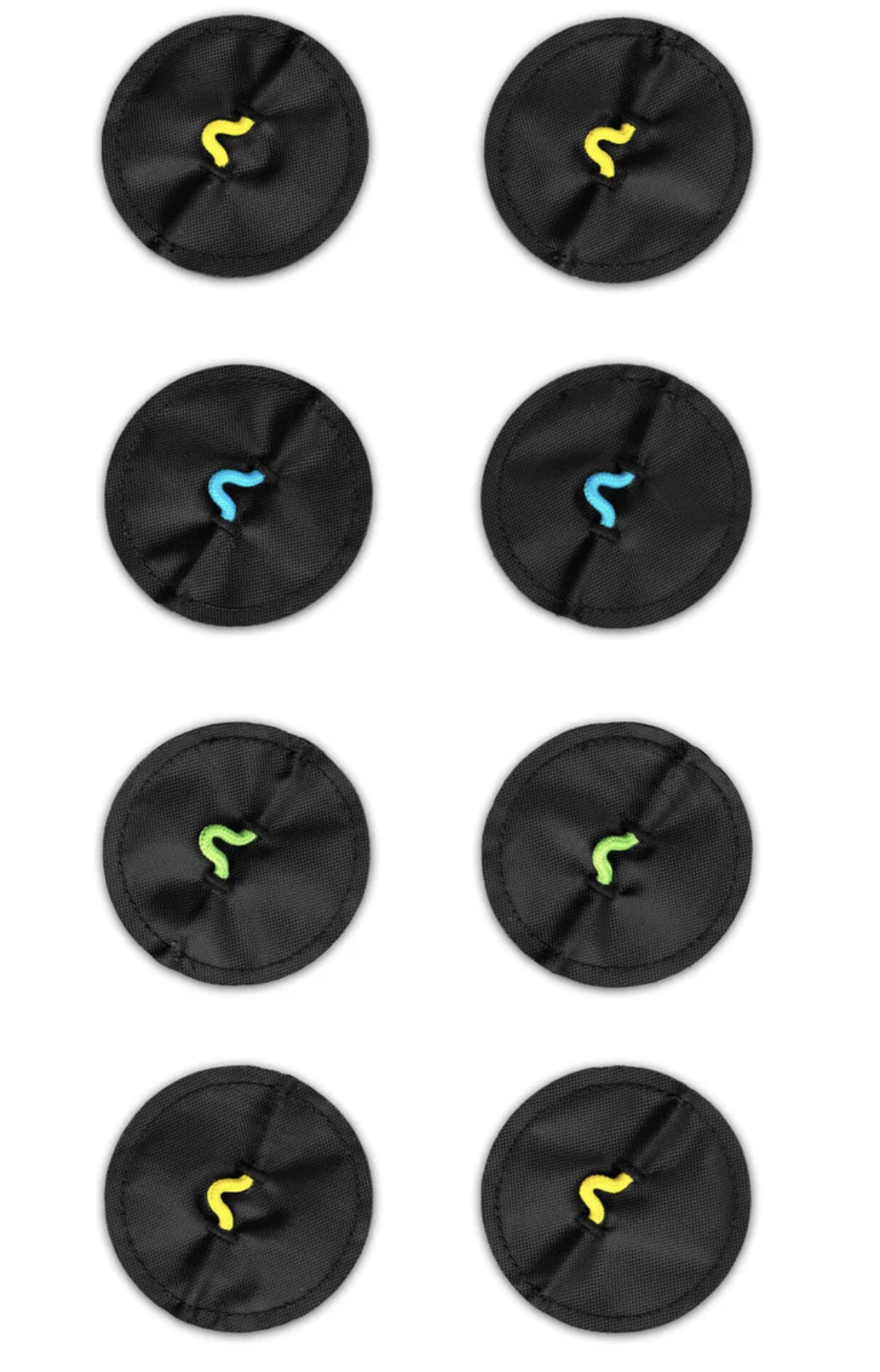
Small color coded clips connect the quilt to the sheet creating a shield against drafts allowing you to change positions while sleeping without feeling as constricted as you would in a typical mummy bag. It also easily allows you to change which side of the sleep system you would like to enter and exit from, unlike a traditional sleeping bag that has the zipper on one side or the other. This allows you to easily unclip either side of the quilt. This is much more convenient allowing you to get in and out of the quilt on the side closest to the door, regardless of the tent you are using or the orientation you have chosen to sleep. This seems like a minor thing but I find it very convenient at increasing your livability inside a small tent.
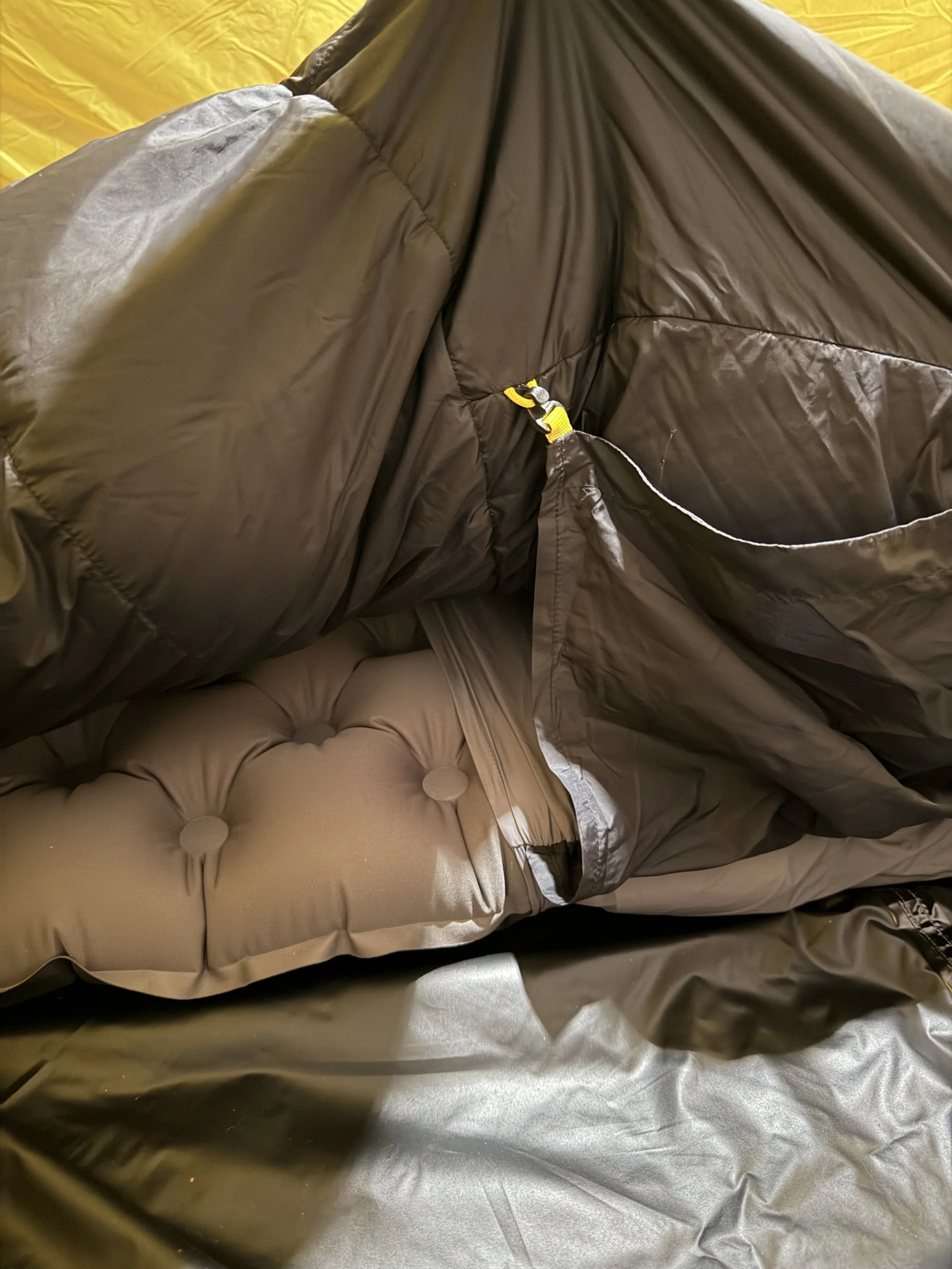
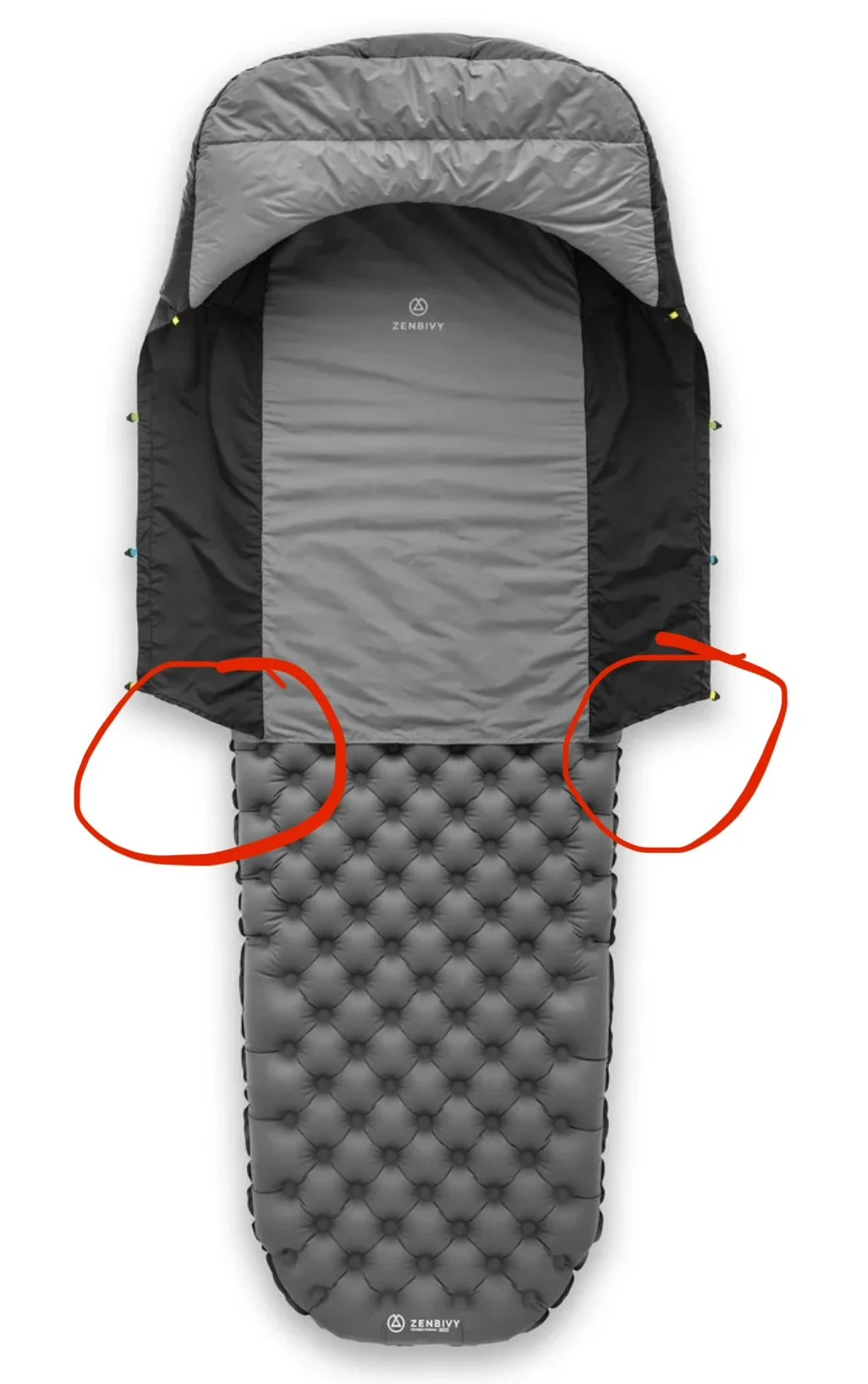
The clip system is one of the stand out features of the ZenBivy system that works incredibly well, however it’s not perfect. While it does a fantastic job at eliminating nearly all drafts while tossing and turning at night. As someone who tosses and turns quite a bit while sleeping (maybe more than normal 😅), I have occasionally (only on some of the coldest winter camps) experience a small draft around my hips, where the draft sheet ends. To prevent this I have to make sure I tuck that bit of the quilt fabric under my hip if it has moved. While it doesn’t happen often, it has happened as I have switched from my back to my stomach. And I have only noticed this while camping on very cold nights. I think if ZenBivy would extend the draft sheet slightly (on the -12°C sheet and quilts) adding one additional clip down the length (making it 5 instead of 4) this would eliminate the issue for even the most restless sleepers like myself, who occasionally perform summersaults in their sleep. By doing this it would only increase the weight of the sheet by a very small amount and not affect the weight of the quilt as it would only require the addition of a very small loop for the sheet to attach.
The fast footbox vs the convertible footbox
The "Fast Footbox" on my -12°C quilt uses a single clip with the quilt fabric folded at the end to create an adjustable footbox. Allowing you to reduce or increase the freedom of movement of your legs which also allows you to manage the temperature at the foot end of the quilt. For instance, you can easily kick out a foot or allow a bit more air to escape if you get too warm. It’s simple and effective.
Instead of the “fast footbox” the convertible quilt has a “convertible footbox” which has three clips and a drawstring at the end which allows you to not only adjust the size of the footbox but actually convert the quilt into a blanket. This is great for camps in the summer or if you’d like to just use the quilt as a blanket around camp.
The Modular Setup: What’s great about the clip system is that all Zenbivy "Light or Ultralight" components are interchangeable allowing you to swap out components of the system as the seasons change. For instance, as the weather warms and we move into spring, I can leave the larger heavier -12°C quilt at home and just use the sheet with a lighter -4°C convertible quilt. And then in the summer you can opt to leave the sheet at home and just use the convertible quilt by itself as a blanket. With this system I can also use any of my 25” pads with the Zenbivy system allowing me to use the appropriate sleeping pad for the conditions. For instance during the winter I have opted to use a rectangular 25 inch pad from Nemo with an 8.5 R value. And at all other times of the year I have used the ZenBivy Flex Air Mattress that has a 4.8 R value. I find ZenBivy’s pad to be extremely comfortable! I just hope at some point they create a pad with a higher R value for colder winter camps when I am sleeping on the snow.
In addition, Zenbivy recently introduced a Conversion Patch Kit that allows users to attach a Zenbivy sheet to virtually any quilt they already own. This means you can take advantage of Zenbivy's innovative draft-free sleep system without having to purchase one of their quilts. It's a thoughtful addition that demonstrates a customer-first approach, giving backpackers more flexibility and a lower-cost way to experience one of the best features of the Zenbivy system. This is something they definitely did not need to do but is awesome. Cudos to Zenbivy for being pro consumer and not forcing people to buy their own quilts to take advantage of such a great system they have created!
In summery, the clip system is great because it:
• Creates sealed sleeping environment allowing you to move around like you would in your bed at home
• Allows for better control of airflow.
• Reduces nearly all cold air intrusion when you move, unlike traditional quilts (although for winter camps, I would like to see an optional extended sheet with an additional clip down the length of the quilt)
• Is a modular system that you can change as the seasons change
2. Comfort – 10/10
Comfort is where the Zenbivy Light Bed truly stands apart from most backpacking sleep systems. As a side and stomach sleeper, I spent years trying to make traditional sleeping bags work, despite the fact that they all seemed to be designed primarily for back sleepers. I constantly struggled with the restrictive nature of sleeping bags, whether it was trying to sleep with my arms under my pillow or above my head, or attempting to roll onto my side in the middle of the night only to have the bag get twisted around me becoming even more constrictive and uncomfortable.
For a long time, I dealt with this discomfort because it was just part of camping. I experimented with quilts, which eliminated much of the restriction and allowed me to move more naturally throughout the night. However, they introduced a new problem, drafts. While quilts were manageable during warmer summer months, cooler nights always sent me back to a traditional sleeping bag for warmth.
The Zenbivy Light Bed solved both issues. Its oversized sheet, integrated hood, and secure clip-in quilt system provide the freedom of movement I wanted without sacrificing warmth. For the first time, this has allowed me to comfortably sleep on my side or stomach with my arms positioned naturally under my pillow or above my head, just as I do at home, while still staying warm.
The result is a sleep experience that feels remarkably natural and comfortable. Of all the backpacking sleep systems I’ve used, the Zenbivy Light Bed comes closest to replicating the comfort of sleeping in my own bed at home.
Why it feels different
• No tight mummy bag walls allowing you to move from your back to your stomach without everything becoming a twisted mess. Side sleepers often struggle with mummy bags because rotating twists the insulation. The ZenBivy system keeps the sheet and quilt fixed to the pad, allowing natural movement throughout the night while the quilt stays in place.
• Soft liner fabric against skin. Zenbivy is proud of their Pongee fabric, and they should be. The 25D pongee liner is designed to feel softer and less “plastic-like” than ultralight nylon fabrics. I have no complaints. It is very comfortable against the skin!
• It allows for natural sleeping positions that are just not possible in a normal mummy bag (side, stomach, with arms overhead). This allows your arms to stay warm which has been an absolute game changer in comfort for me.
3. Warmth & Temperature Performance – 10/10
Temperature ratings
Light Quilt: -12°C (10°F) limit / -7°C (20°F) comfort
Light Convertible Quilt: -4°C (25°F) limit / 2°C (35°F) comfort
Flex Air Mattress: 4.8 R Value
This rating aligns with most premium down quilts.
Real-world warmth
Unlike many manufactures Zenbivy does not produce separate quilts for men and women. Instead they make it simple and just offer one unisex quilt in various sizes. And like most manufactures they indicate the limit temperature and comfort temperature for their quilts. So why do I think they do it best. For a moment let’s compare the -12°C (10F) Zenbivy Light Quilt with a traditional sleeping bag that has a reputation of also being comfortable for side sleepers, the Nemo Riff 15F Down sleeping bag. The reason I am choosing to compare these two is because at one point these were the two sleep systems I was looking to purchase as a side sleeper, before inevitably getting the ZenBivy Quilt.
On paper companies typically will use their bags limit rating when naming the bag (deceptive marketing, but the standard). As expected the Zenbivy is listed as a 10F (-12°C) quilt, which is in fact the lower limit rating of the quilt. Nemo on the other hand markets their bag as a 15F (-9.44°C) sleeping bag but if you look at the actual limit rating of the bag on the companies spec sheet, it is listed as only being -8°C (17.6°F). So when Nemo decided to name this bag, they actually rounded down to 15°F, even though that temperature is actually lower than their stated limit. Like I said deceptive marketing, but I guess Nemo Riff 17.6F didn’t sound as good as Riff 15F 😅.
Deceptive marketing and questionable rounding aside. At the time of purchase, these two bags were roughly the same price with comfort ratings of -7°C (20F) for the ZenBivy versus -2°C (28F) for the Nemo. But here is where it gets interesting. The weight of the Zenbivy quilt is only 1.07kg vs 1.2kg for the Nemo. Despite being warmer, the Zenbivy quilt is actually lighter. Even when adding the weight of the Zenbivy sheet and hood, the complete system weighs approximately 1.27 kg, only slightly heavier than the Nemo sleeping bag. But here was the deciding factor for me.
The more interesting comparison comes when you start looking at the down fill weights of these two bags, which is the actual amount of down insulation injected into each. Both products use 800 fill power down. The Zenbivy Light Quilt contains 706 g of down, compared to 593 g in the Nemo Riff. That figure doesn't even include the additional 53 g of down contained within the Zenbivy hood and sheet. Of course, the Zenbivy's lower comfort rating would suggest it should contain more insulation. However, the design of a quilt allows that insulation to be used more efficiently. With the Zenbivy system, nearly all of the down is positioned on top of your body where it can effectively trap heat. In contrast, a significant portion of the insulation in a traditional sleeping bag, like the Nemo, sits underneath you and becomes compressed, greatly reducing its insulating value. When viewed from that perspective, the Zenbivy provides considerably more usable insulation for its weight and you start to see that you are getting quite a bit more for your money in terms of warmth with the Zenbivy system.
I believe part of this also comes from Zenbivy's decision not to create separate men's and women's models. Since men generally sleep warmer than women, many manufacturers adjust down fill weights and actually produce two different bags, one for each gender. Typically women’s sleeping bags have significantly more insulation for the advertised comfort rating than the sleeping bag designed for the men. Zenbivy instead publishes one rating system for everyone and, in my experience, those ratings are surprisingly conservative, particularly if you are a male.
In real-world use, I have found the -12°C (10°F) Zenbivy Light Quilt to be comfortable at temperatures much closer to its advertised 10°F lower limit than its published 20°F comfort rating. That has been a refreshing change from many traditional sleeping bags I've used, where the temperature printed on the bag often feels significantly more optimistic than reality.
In summary, my experience with the two Zenbivy quilts I own has been that the published lower limit rating, which is also the temperature used in the product name, is much closer to the actual comfort temperature I experience in the field. That has not been my experience with many other sleeping bags, where the advertised rating often feels more like a survival limit than a comfortable night's sleep.
Side note: For my height, I would normally use a regular-length sleeping bag. However, Zenbivy's sizing guide recommended a Large quilt. To keep the comparison fair, I compared the Large Zenbivy quilt against the Large Nemo Riff. Had I compared the Zenbivy to the regular-length Nemo that would normally fit my height, the Nemo's down fill weight would have been even lower at just 540 g.
4. Weight & Packability – 9/10
Weight is where the “Light” ZenBivy system makes its compromises but really only when compared to other quilts. Unlike the ultralight versions of the quilt, I opted for the more comfortable 25D Polyester Pongee material. It’s a bit more durable and softer which adds to the comfort at the cost of a little extra weight. For me, that bit of extra durability and comfort against the skin is worth the small cost in weight and packability. For comparison I have listed the weights of the lightest Ultralight Zenbivy quilts compared to the Light Quilts that I own..
ZenBivy Light System:
Large Light Quilt -12°C: 1.07 kg (2 lb 6 oz)
25” Light Sheet (hood) -12°C : 246 g (8.68 oz)
Large Convertible Light Quilt -4°C: 793 g (1 lb 12 oz)
ZenBivy Ultralight System:
Large Ultralight -12°C Ultrasonic Muscovy 950FP+ : 751 g (1 lb 10 oz)
25” UltraLight Sheet (hood) -12°C : 198 g (7.0 oz)
Large Ultralight -4°C Ultrasonic Muscovy 950FP+ : 510 g (1 lb 2 oz)
As you can see you definitely save a bit of extra weight and packability if you opt for one of ZenBivy’s ultralight quilts, but that’s a choice you’ll have to make for yourself. I typically prefer comfort and durability, however if I was looking to lighten my pack for a multiday trip the weight savings is a no-brainer.
Compared with Competition:
The Zenbivy Ultralight Quilts are highly competitive in weight when compared to other premium quilts on the market. Once you add the weight of the sheet and hood, the complete sleep system becomes somewhat heavier, bringing its total weight closer to that of similarly rated sleeping bags. However, the modest weight increase is more than offset by the significant gains in comfort, freedom of movement, and thermal efficiency. In my experience, the added comfort and warmth far outweigh the small weight penalty, making it a worthwhile tradeoff for a much better night's sleep in the backcountry.
Pack Size
The recommended stuff sack for the ZenBivy -12°C light quilt, -12°C sheet and pillow is a 15L dry sack. It seems large, but ZenBivy dry sacks with compression caps works incredibly well to keep out water and reduce the overall size of the entire sleep system. When compressed it’s similar in size to other winter sleeping bags I own.
The recommended dry bag for the -4°C, convertible, quilt and pillow is a 4-7L dry sack. The ultralight versions of the warmer quilts also fit into this smaller dry bag.
Overall I have no complaints and would definitely recommend getting the sleep system with the recommend dry bags and compression straps.
5.Durability & Materials - 10/10
Materials include:
• 15D nylon shell
• 25D pongee liner
• 800FP hydrophobic down insulation
The Zenbivy Light Bed strikes an impressive balance between comfort, weight, and durability. While the light bed is not designed as an ultra lightweight backpacking system, the materials are still relavtively light and avoid feeling fragile.
The standout material is Zenbivy's proprietary 25D Pongee liner fabric, which is noticeably softer and more comfortable against the skin than the slick, plastic like feel often associated with ultralight nylon sleeping bags. This contributes significantly to the bed like comfort that Zenbivy is known for.
From a durability standpoint, the fabrics used throughout the system have proven resistant to normal wear and tear, and the sheet-and-quilt design can actually reduce stress on the insulation by preventing the constant twisting and compression that often occurs in traditional sleeping bags. I have now had the quilts for well over a year and have yet to notice any feathers coming out of the bag.
The clip system that connects the quilt to the sheet is one of the Light Bed's defining features and has generally proven reliable over extended use. Unlike zipper-based systems that can snag or fail over time, the clips are simple, easy to operate in the dark, and less prone to mechanical failure. The sheet itself also helps protect the quilt from dirt, body oils, and abrasion, potentially extending the life of the insulation because you are not lying on it like you would in a traditional sleeping bag.
The down insulation is another strong point. Zenbivy uses premium responsibly sourced down with high fill-power ratings, providing excellent loft and long-term performance when properly cared for. As with any down product, maintaining loft requires keeping the insulation dry and storing it uncompressed when not in use. I have yet to notice any degradation in the loft of the quilt or its warmth. I have also never experienced any condensation that has caused the down to clump inside the bag.
After extensive use as my only sleep system the quilt, sheet, pillow and sleeping pad are holding up well over multiple seasons. The fabrics, stitching, and attachment points appear thoughtfully designed, with no obvious weak points that compromise durability. While it may not withstand the abuse of throwing it repeatedly on the ground or careless storage, it offers durability that is more than adequate for its intended use.
In summary the Zenbivy light bed system feels more luxurious than most backpacking sleep systems while remaining durable enough for regular backcountry use. For me the materials and construction justify the slight weight increase over many minimalist quilts.
⸻
Who Is the ZenBivy Light bed for?
✅ Side and stomach sleepers who have never been quite comfortable in a traditional sleeping bag.
✅ Quilt lovers who are looking for a bit of extra draft protection. Using ZenBivy’s quilt conversion you can even make any existing quilt you already own work with a Zenbivy sheet
✅ Campers who prioritize sleep comfort and are looking for a sleep system that is as close in comfort as their bed at home.
✅ People who may have previously liked quilts but found them to be too drafty.
Not Ideal For:
❌ Backpackers needing the most minimalist ultralight system on the market
❌ People who don’t want to fit a sheet to their sleeping pad before bed and would rather just throw and bag out and crawl into a sleeping bag.
❌ Gram counters
⸻
Final Verdict – 9.7/10
The Zenbivy Light Bed is one of the best choices for hikers who prioritize sleep quality over base weight. This is one of the most innovative sleep systems available for backpacking. It bridges the gap between a traditional sleeping bag sand a quilts by providing the comfort of a bed while maintaining reasonable weight, packability and warmth. If you're tired of "mummy-bag claustrophobia" but aren't ready to freeze in a drafty ultralight quilt, this is the system for you.
If your priority is sleep quality on the trail or if you are a side and stomach sleeper, it’s one of the best options available. It’s now the only sleep system I use.
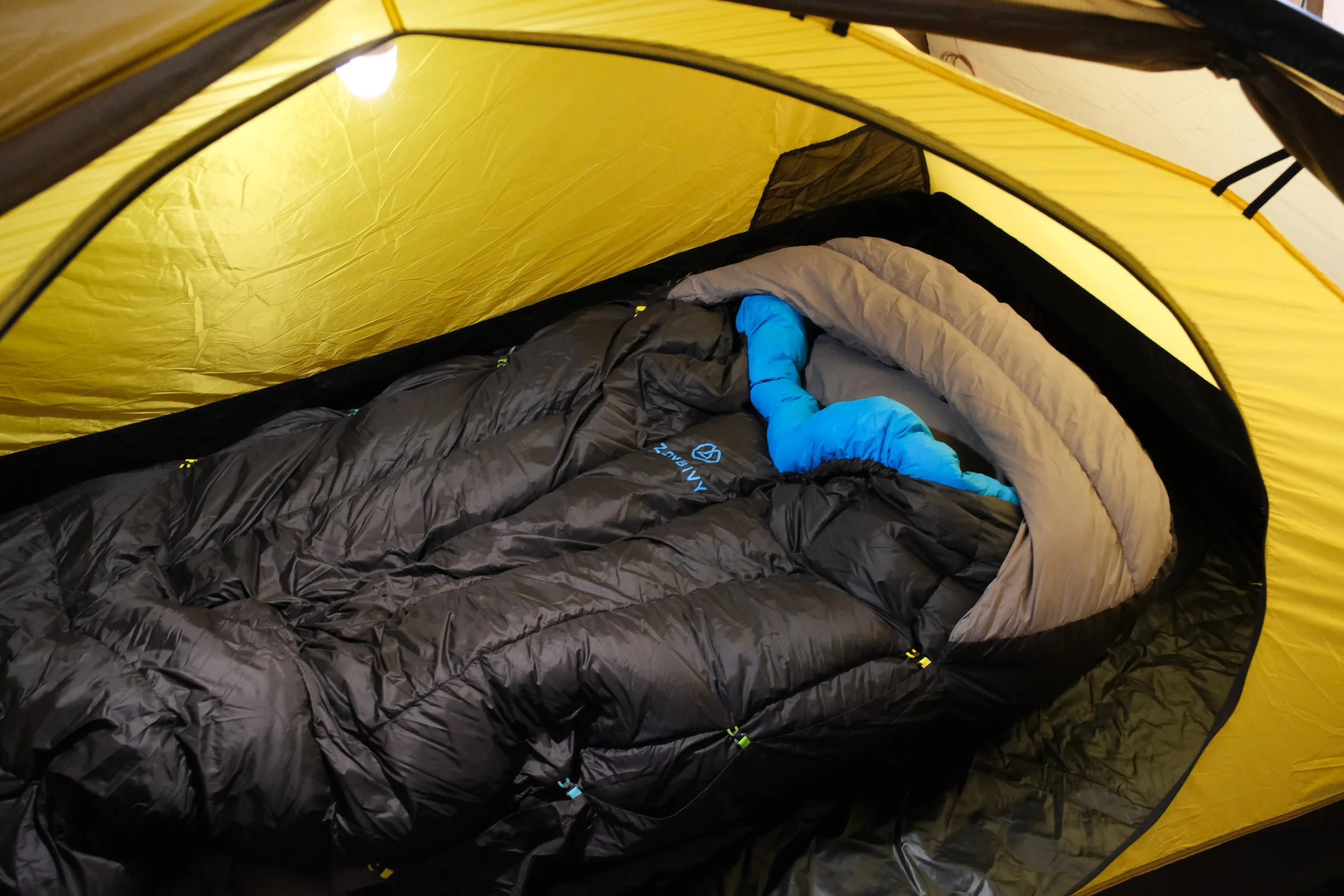
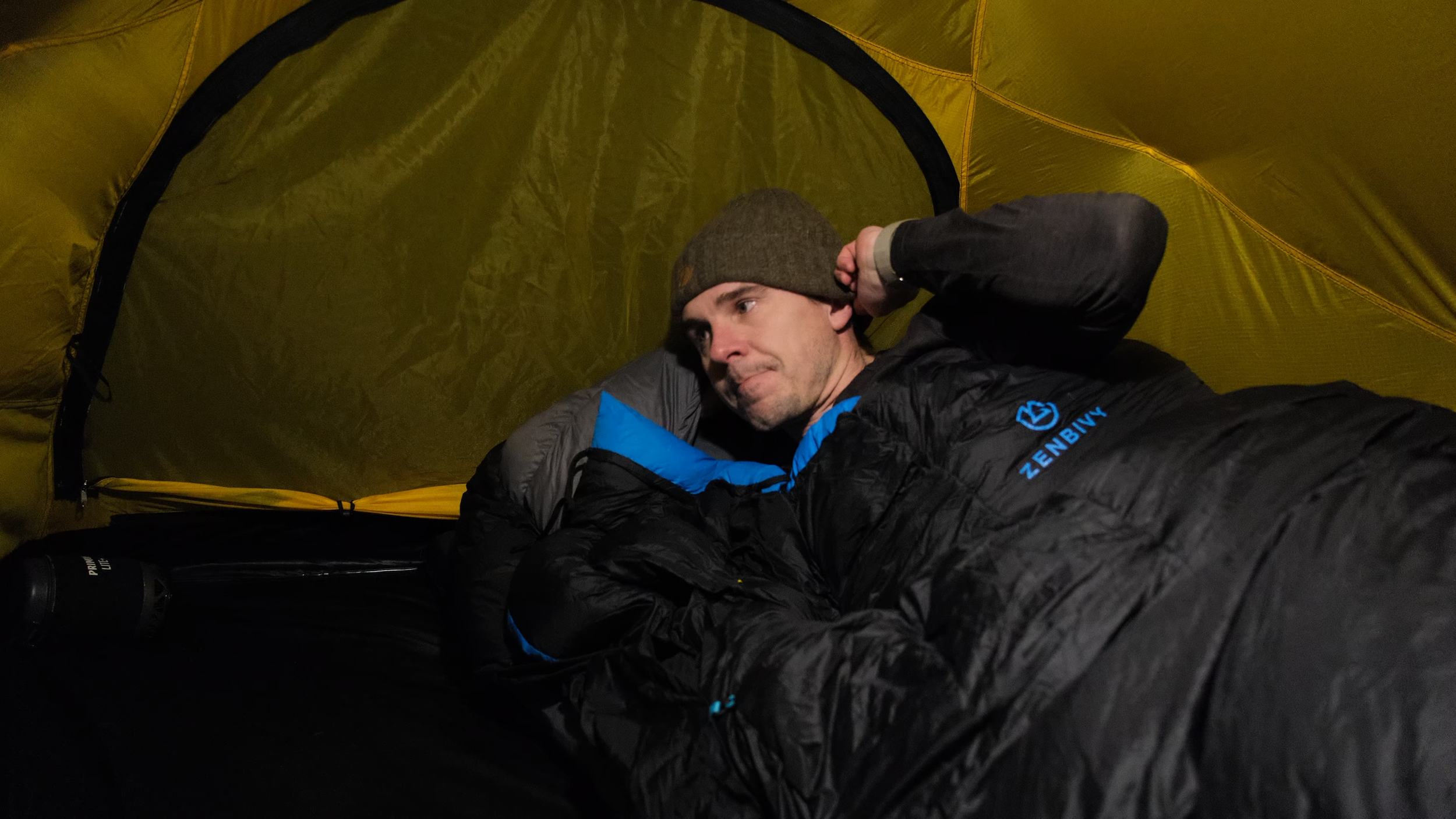
Above is the complete ZenBivy -12°C (10°F), Light Quilt, -12°C Light sheet, Flex Air Mattress, with SoftTop Pillow. This is the complete system that I have used for winter camping and have been very warm and comfortable.
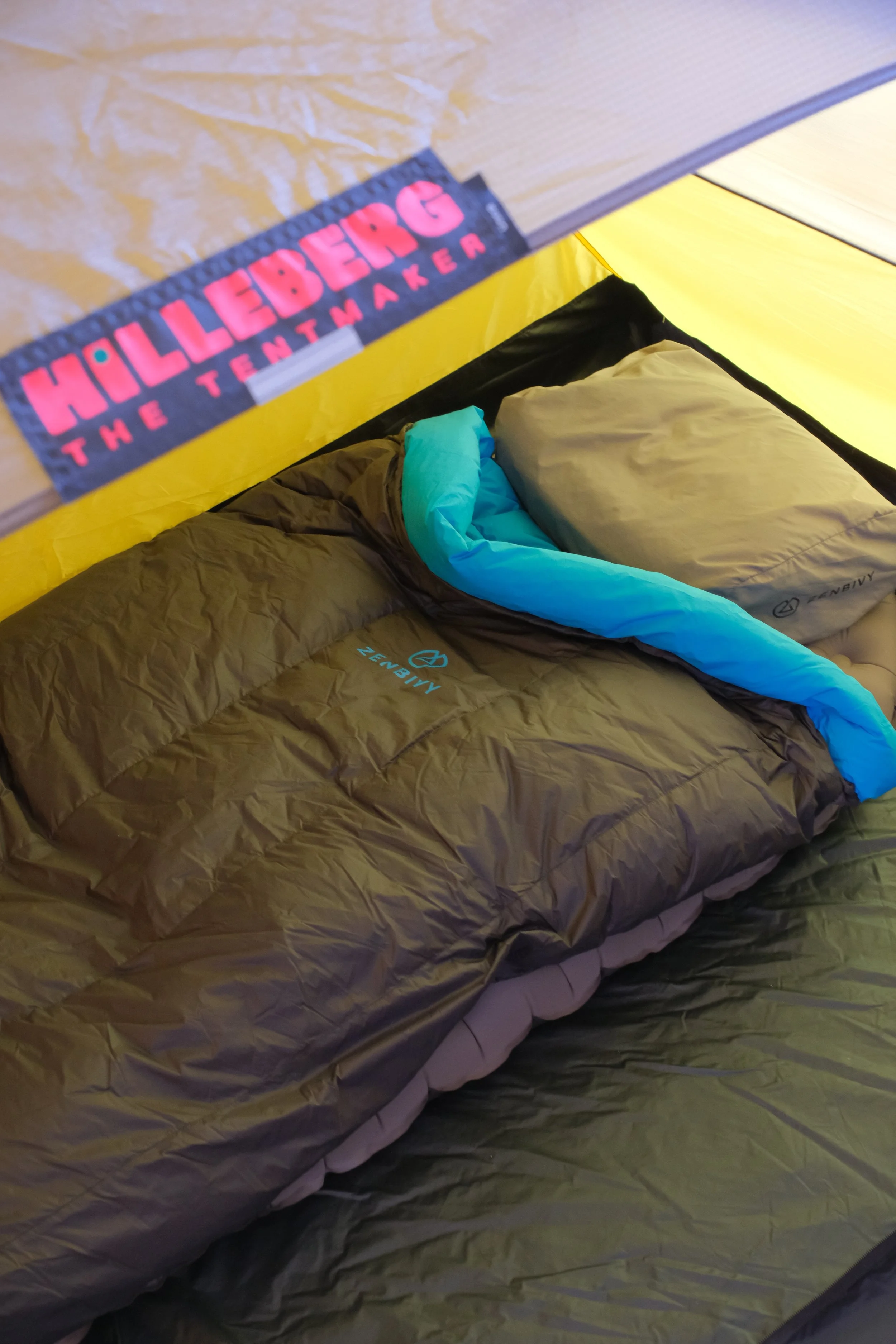
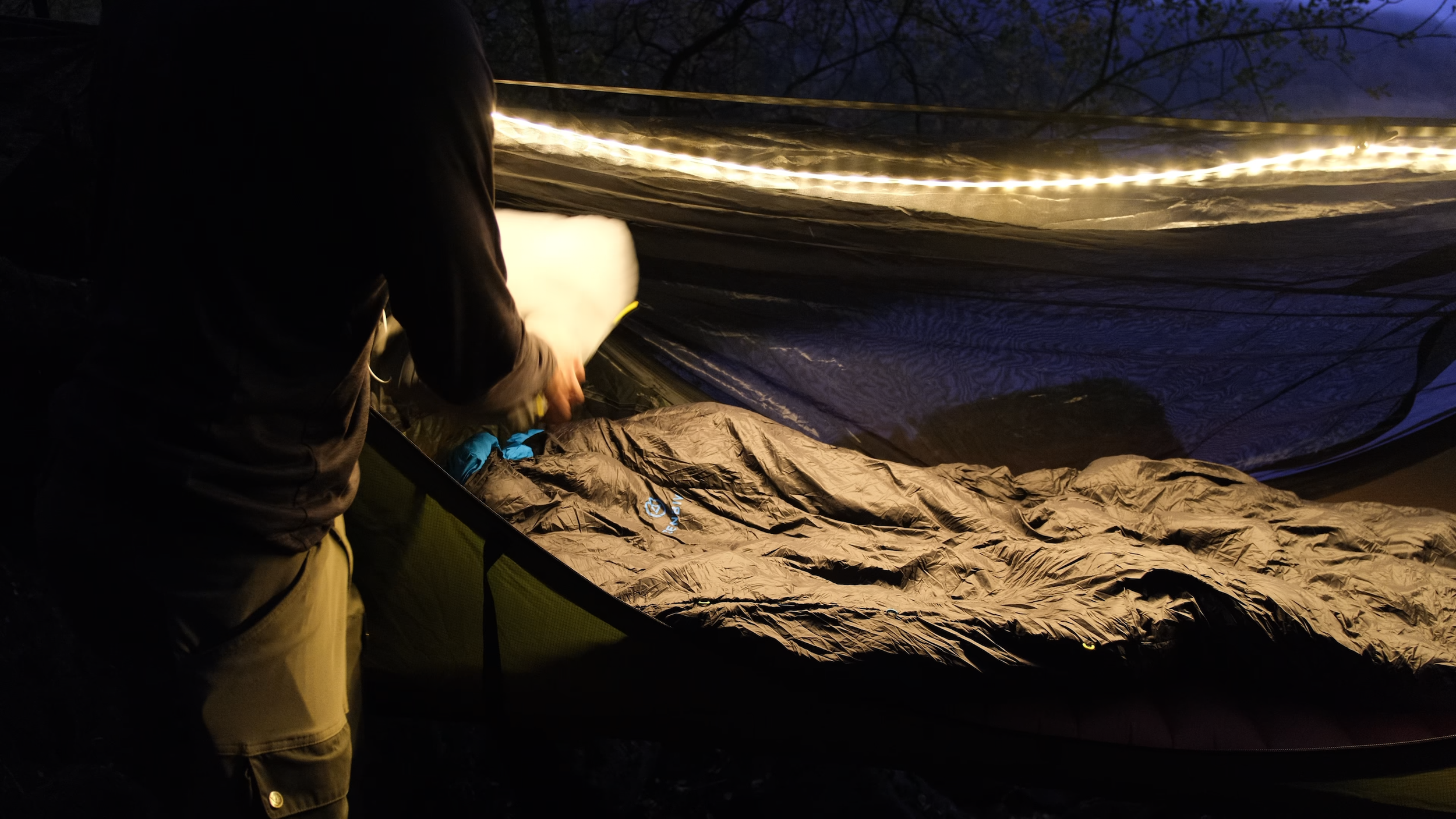
For many of my warmer spring, summer and autumn camps, when drafts are not much of a concern I will often leave the sheet at home and just use the -4°C convertible quilt with just the soft top pillow. This is also a great setup when using this sleep system in a hammock.
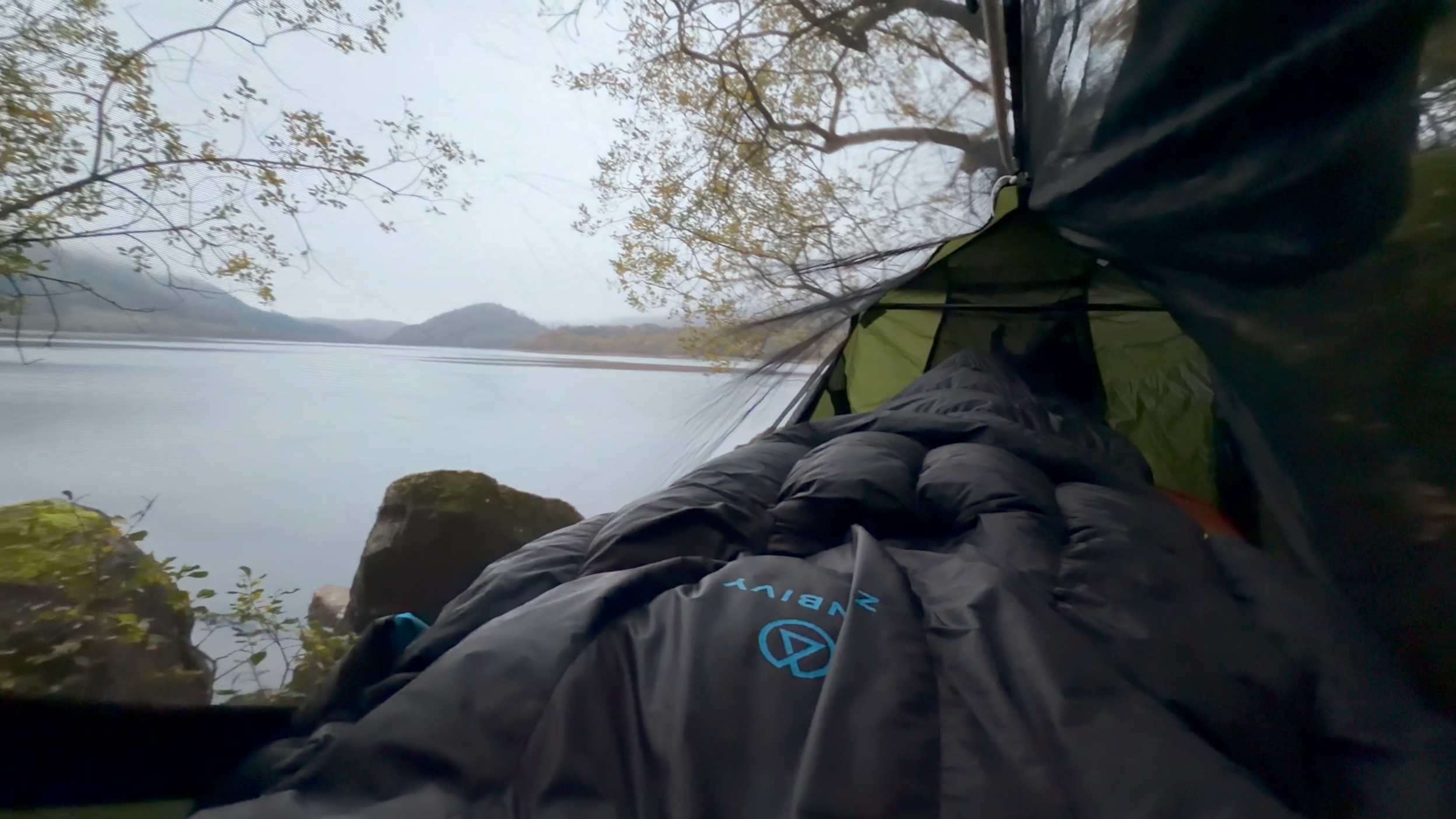
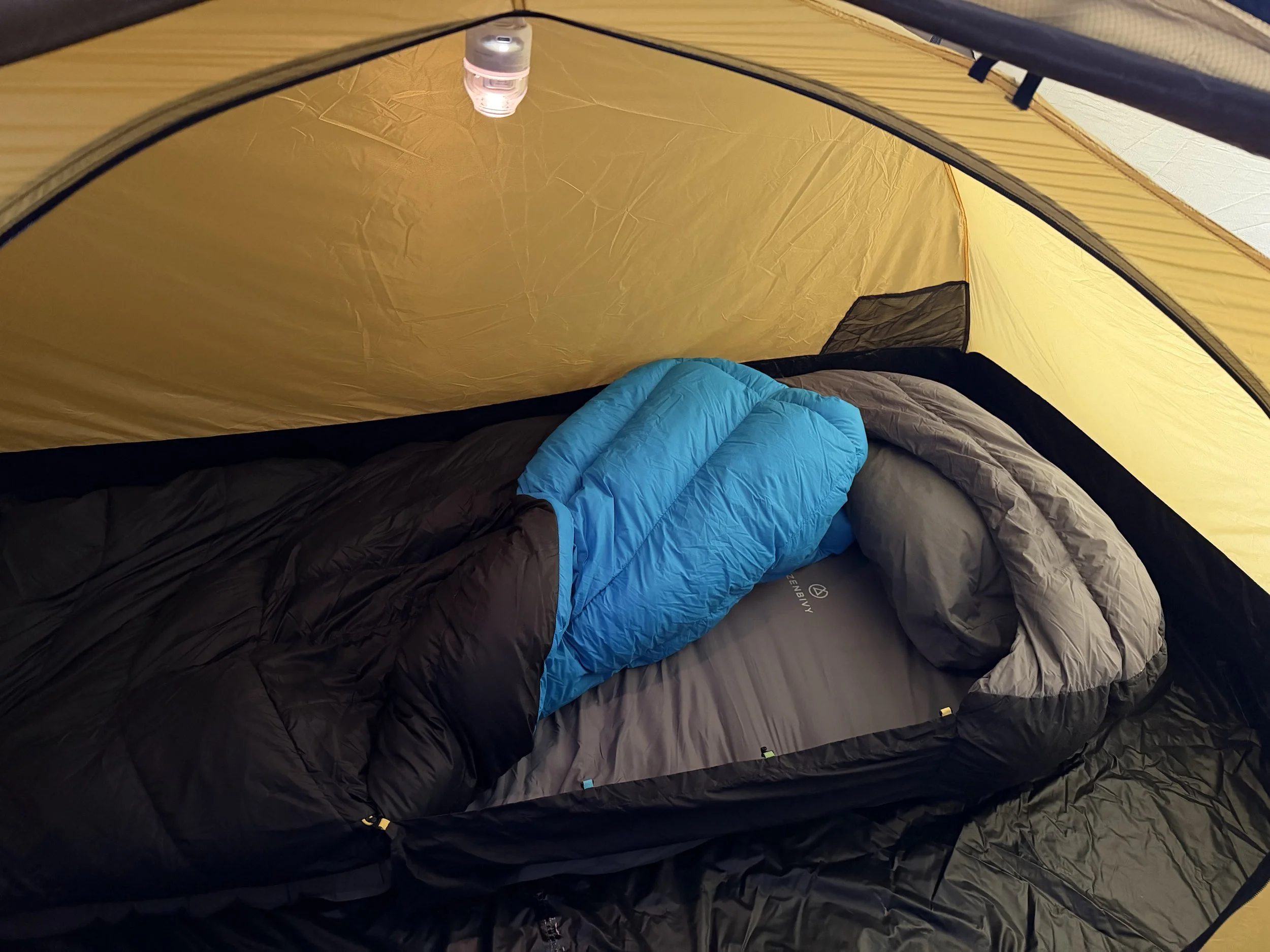
The clip system is intuitive and easy to use. One of its biggest advantages is that the quilt can be unclipped from either side, unlike many traditional sleeping bags that force you to enter and exit from a single zipper side. With the Zenbivy system, you can simply unclip the side closest to your tent door, making it much easier to get in and out of your sleep setup. It's a small detail, but one that adds a noticeable level of convenience, especially during nighttime exits or when space inside the tent is limited.
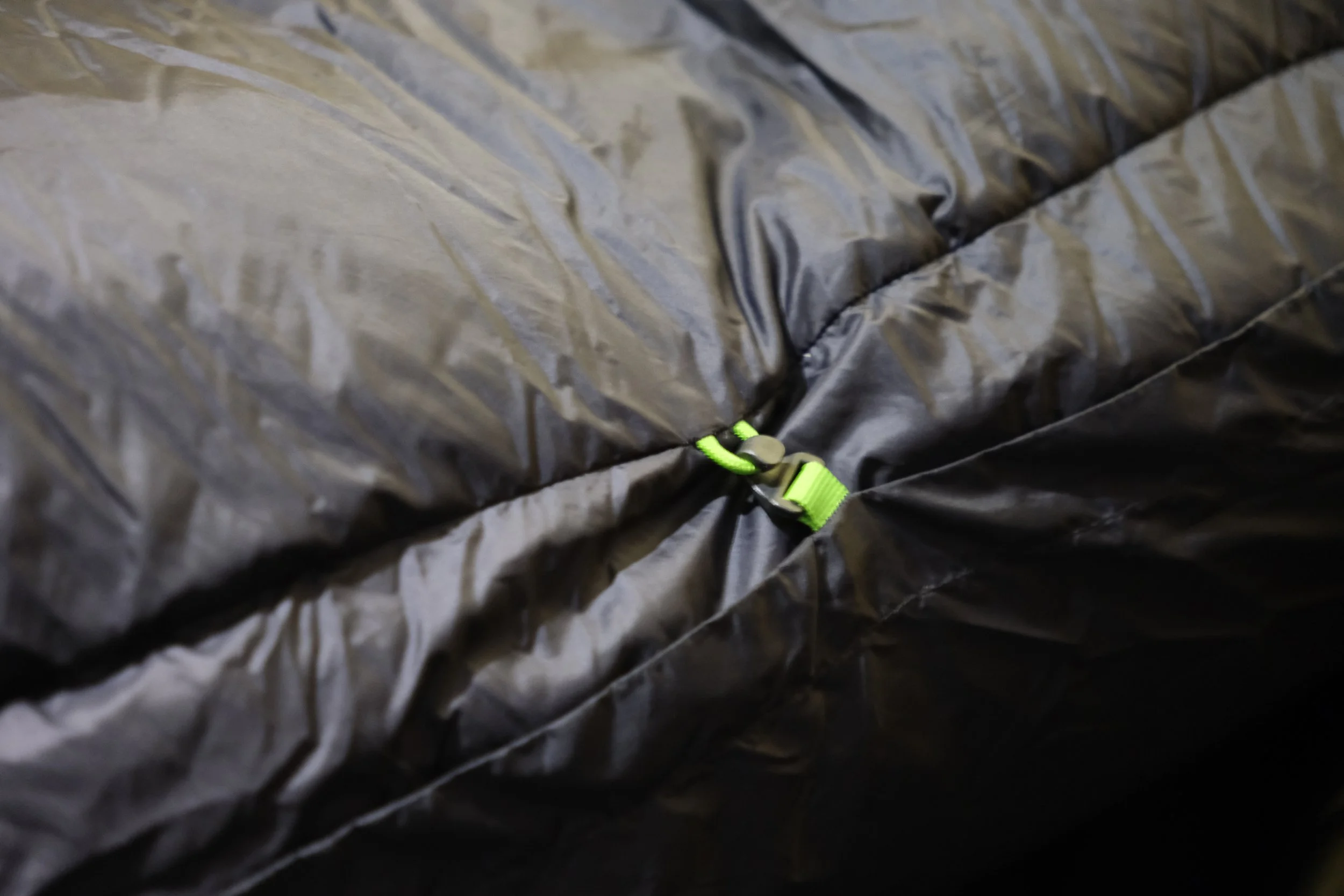
While the ZenBivy quilt does eliminate drafts 99% of the time. I have found That I will occasionally experience a small draft around my hips on the coldest nights when tossing and turning. I think if ZenBivy would extend the draft sheet slightly (on the -12°C sheet and quilts) by adding one additional clip down the length (making it 5 instead of 4) this would eliminate the issue for even the most restless sleepers like myself for a minimal weight gain. See above photo.
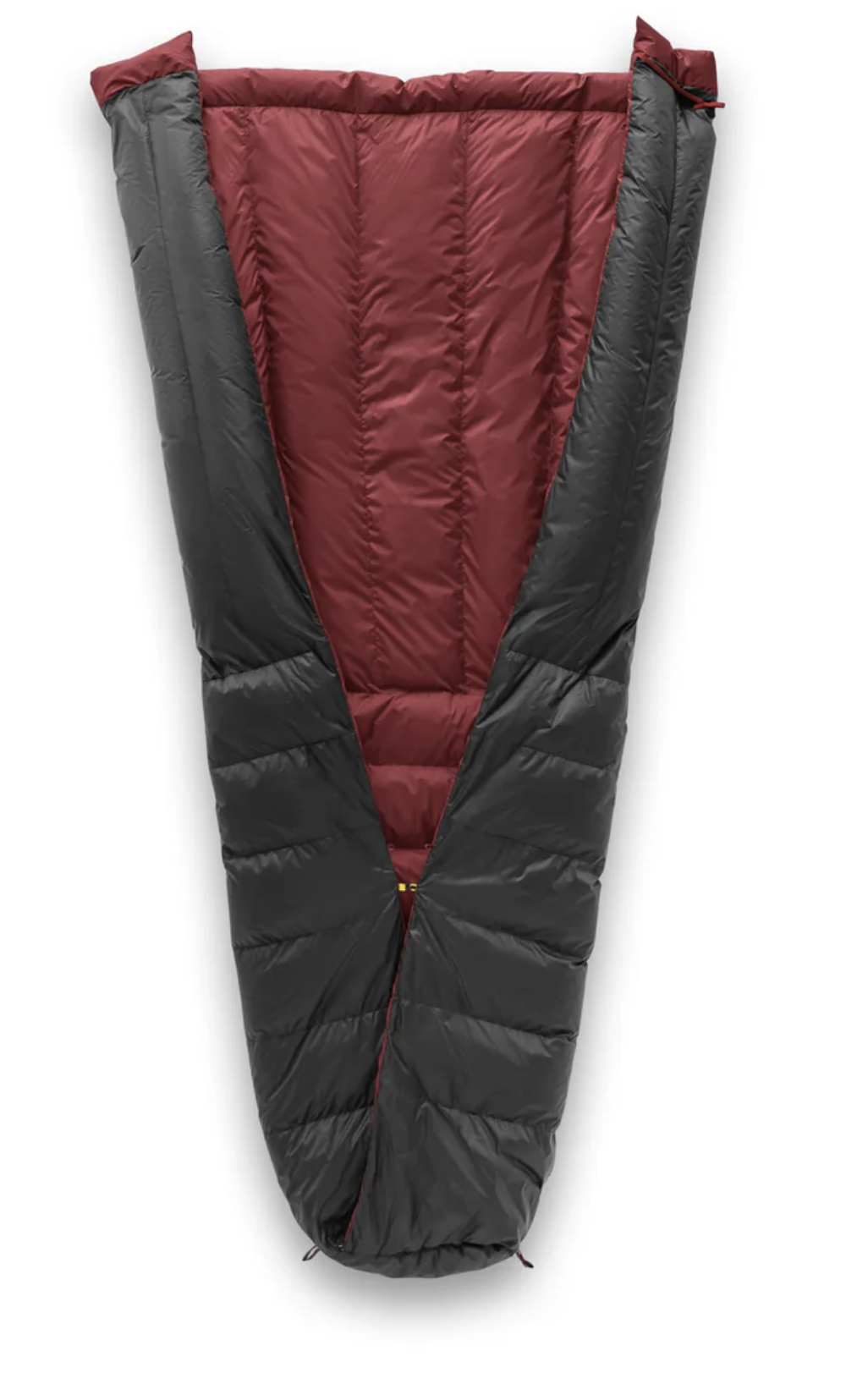
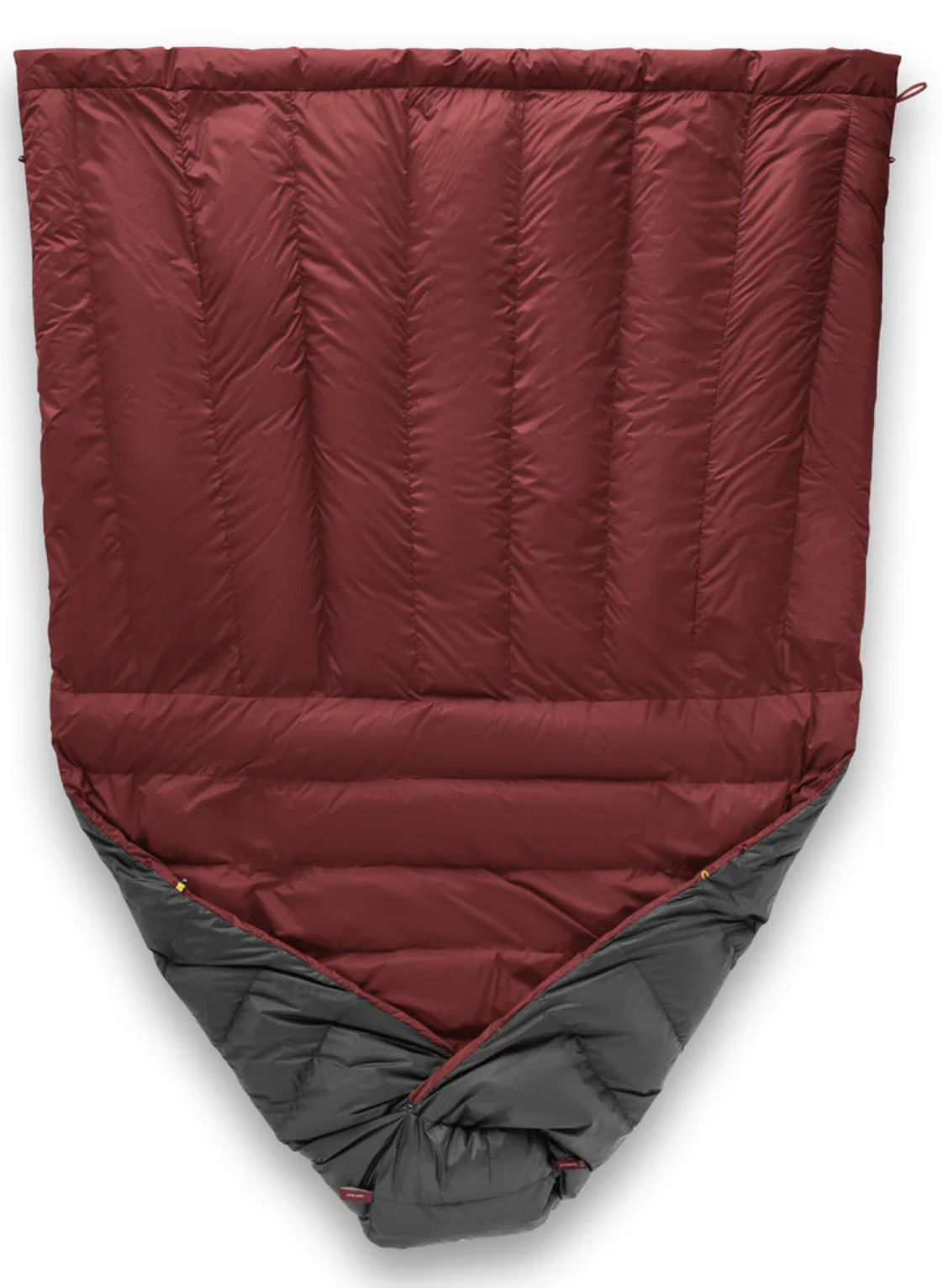
With a single loop and clip the fast foobox allows you to adjust the amount of space at the foot end of the quilt with which also helps to regulate your temperature (see above). While the convertible footbox has 3 clips and a drawstring at the end which allows you to actually use the quilt as a blanket around camp. (see below)
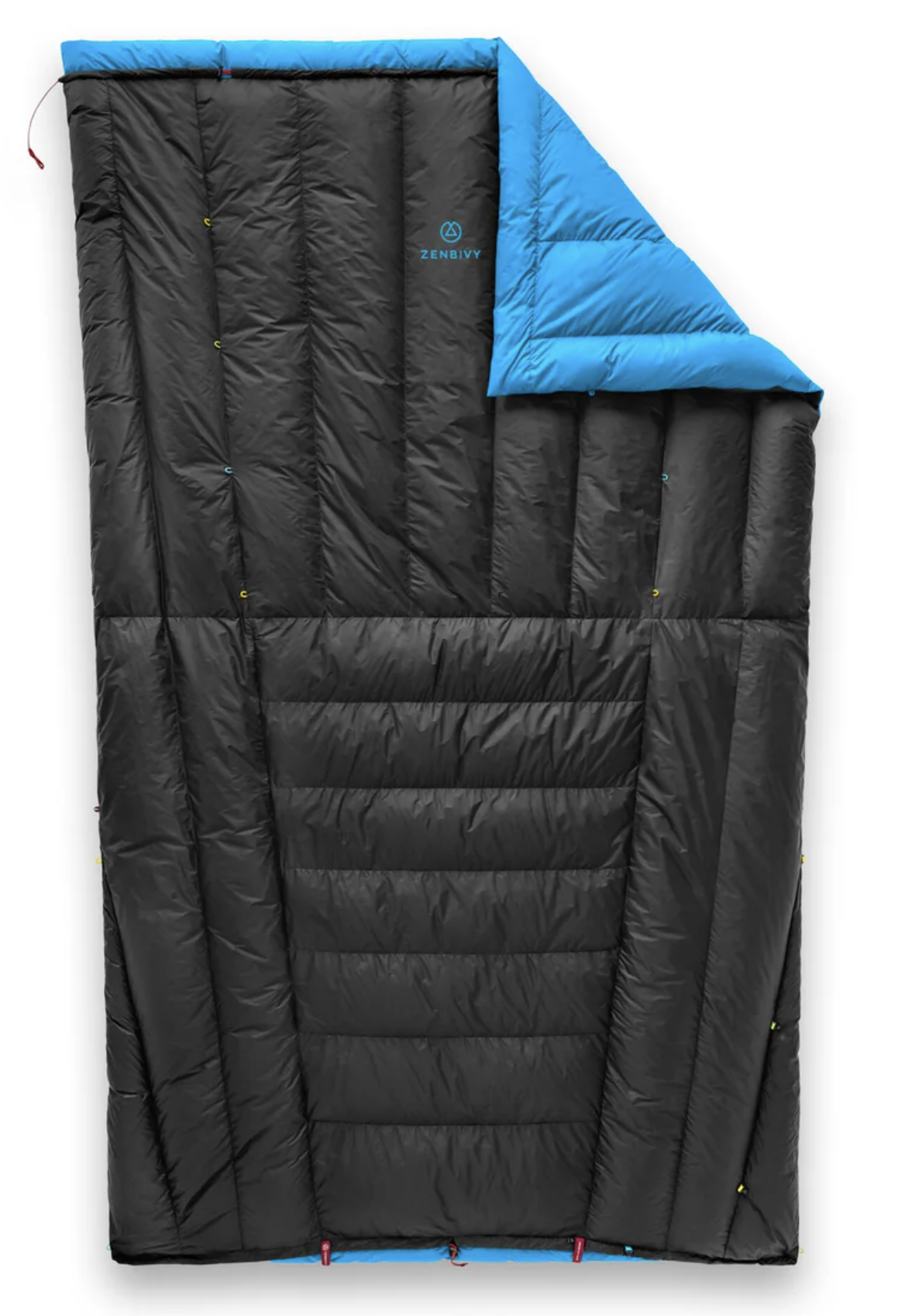
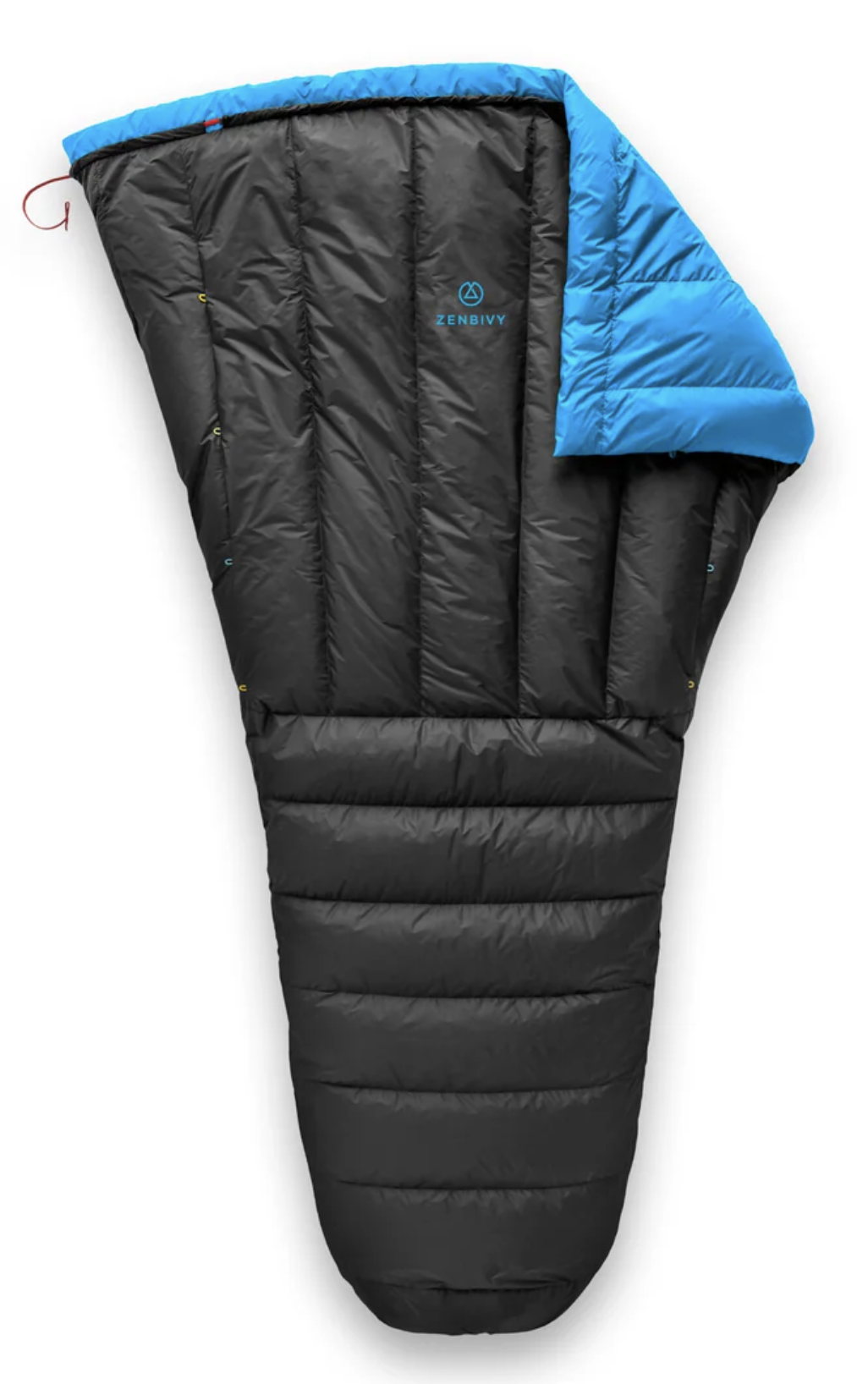
Zenbivy recently introduced a Conversion Patch Kit that allows users to attach a Zenbivy sheet to virtually any quilt they already own. This means you can take advantage of Zenbivy's innovative draft-free sleep system without having to purchase one of their quilts. It's a thoughtful addition that demonstrates a customer-first approach, giving backpackers more flexibility and a lower-cost way to experience one of the best features of the Zenbivy system.
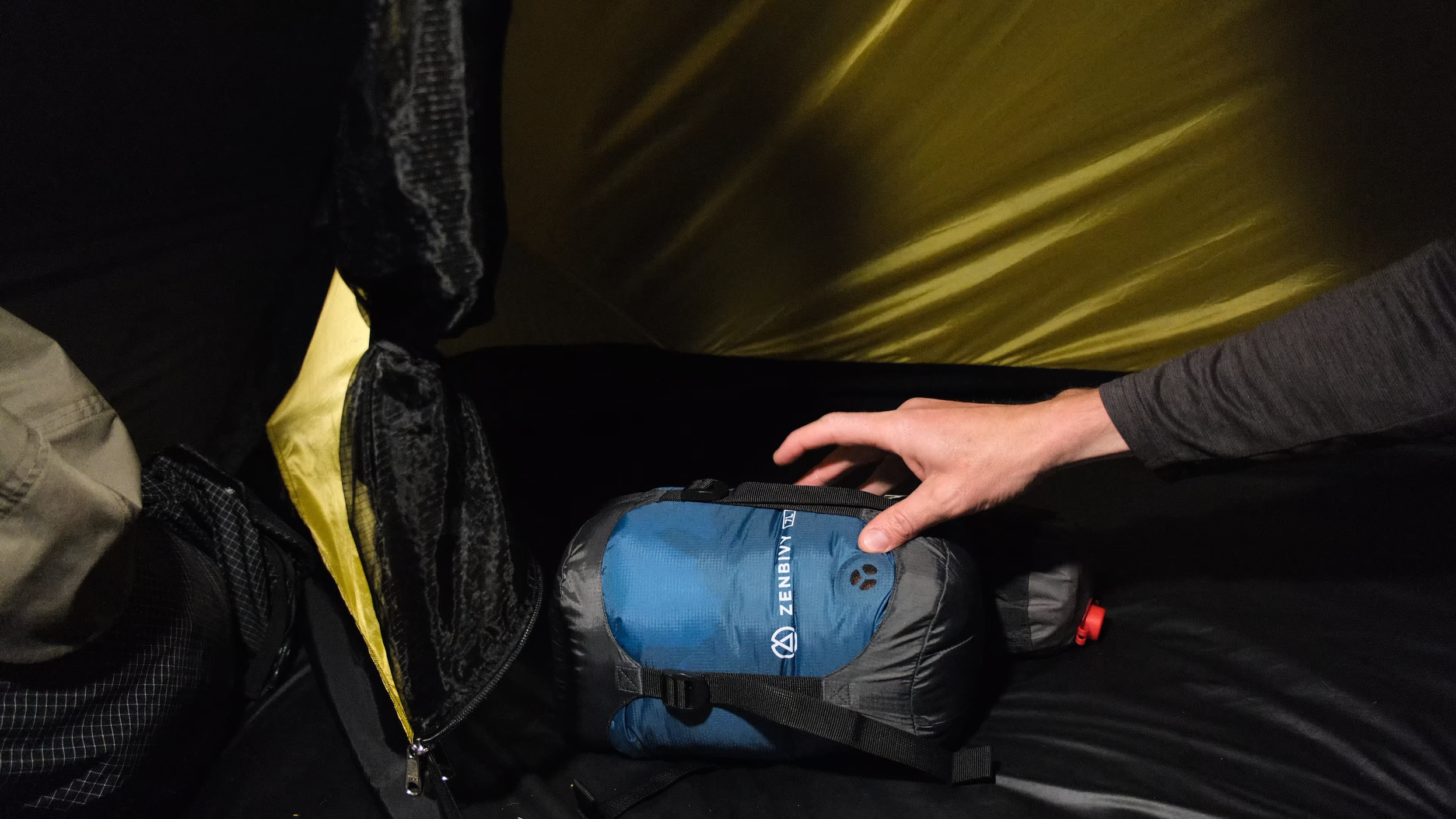
Pack Size: On the left you will see the complete ZenBivy -12°C sleep system for a winter camp in the 15L dry bag (this includes the quilt, sheet, and pillow)
On the right you will see the Zenbivy -4°C quilt and pillow inside the compressed 7L dry bag.
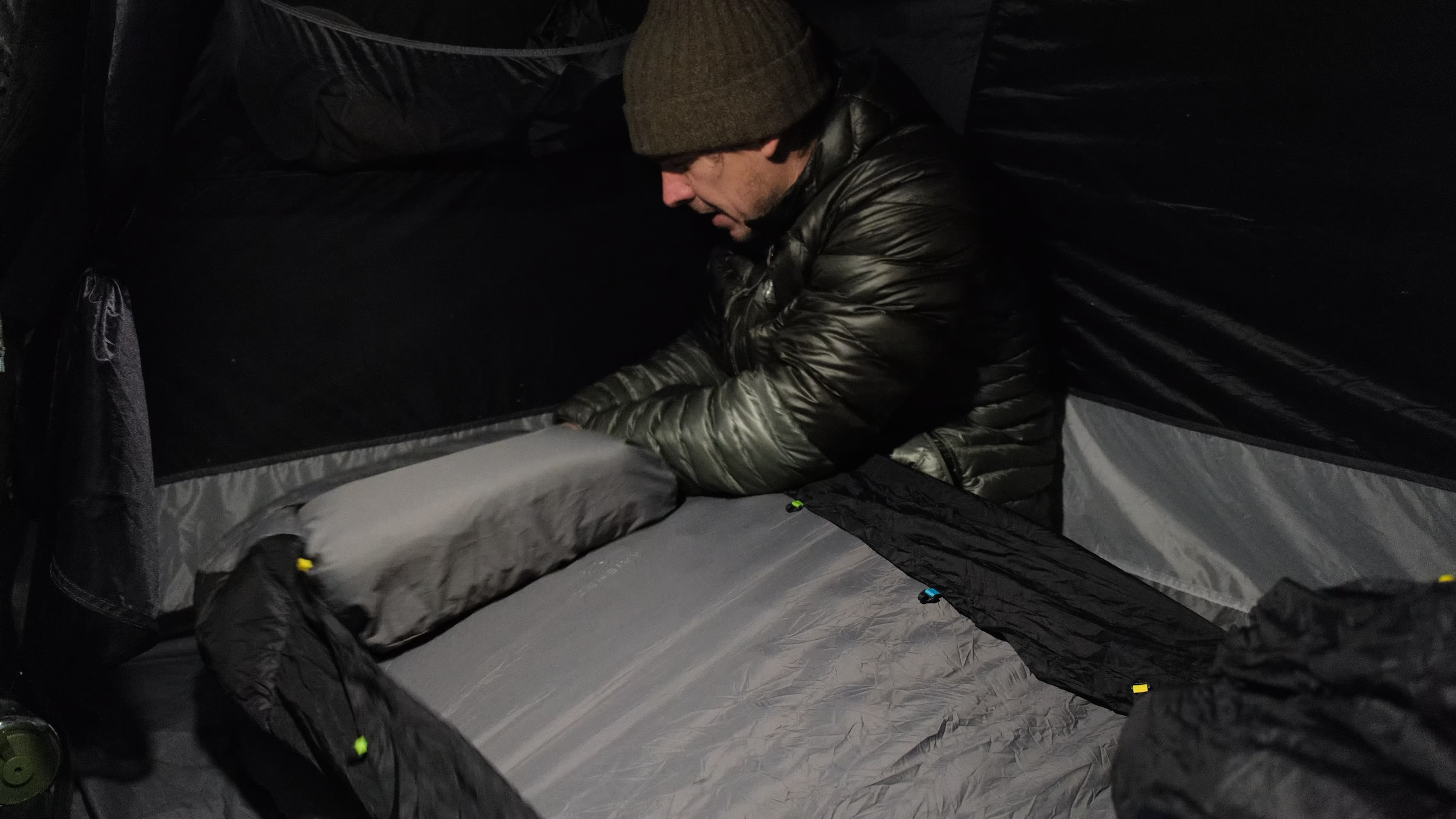
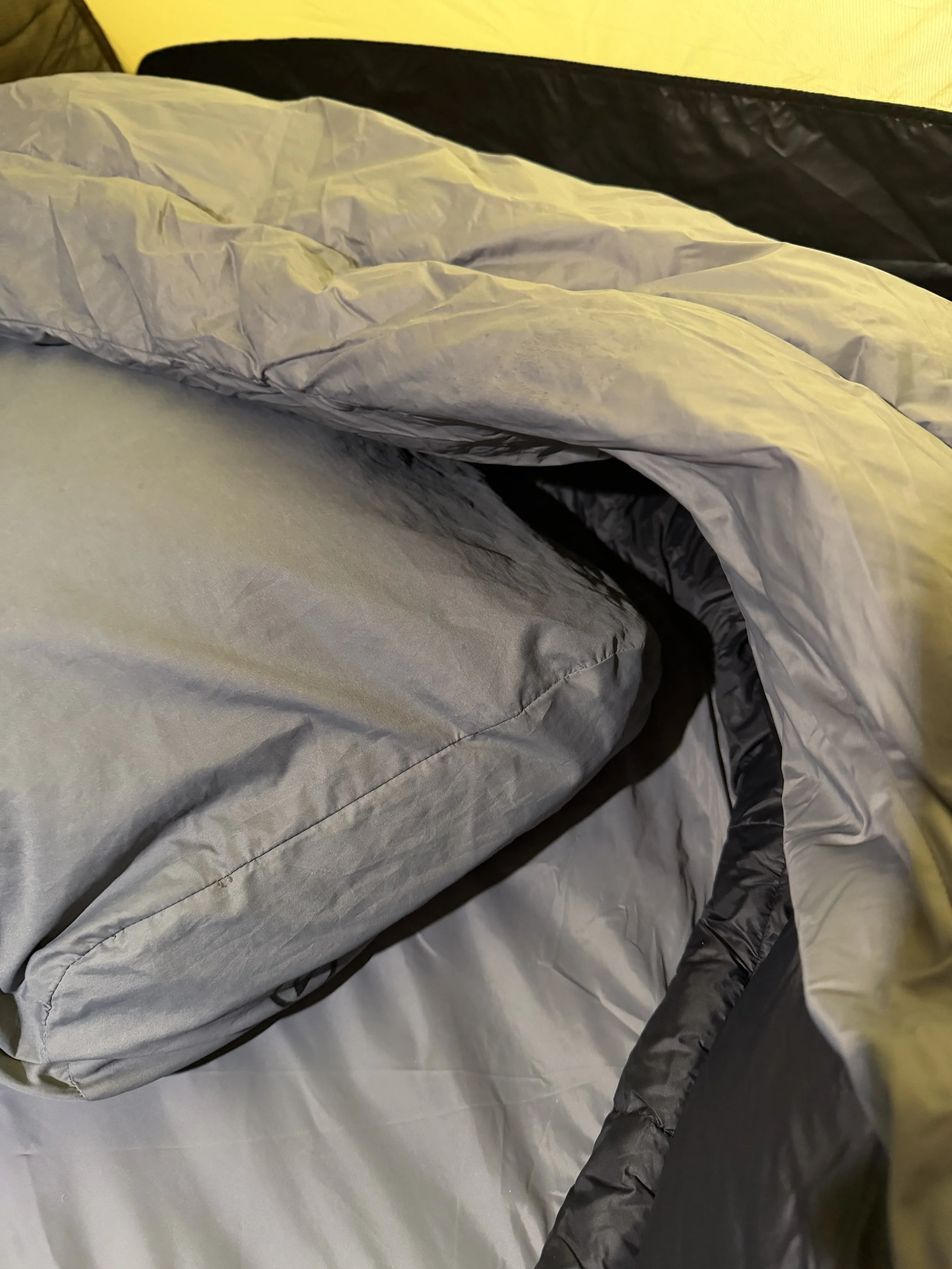
The Zenbivy SoftTop Pillow is a simple but effective upgrade over standard backpacking pillows. Its soft fabric top feels noticeably more comfortable against the skin than typical nylon shells, and the internal air bladder provides adjustable support so you can fine tune firmness. It integrates well with the Zenbivy system and stays in place with two clips making it much better than most loose pillows. While it’s still an inflatable pillow at its core, the added comfort of the soft top pillow topper and the adjustable design make it one of the more comfortable pillows I have ever used.
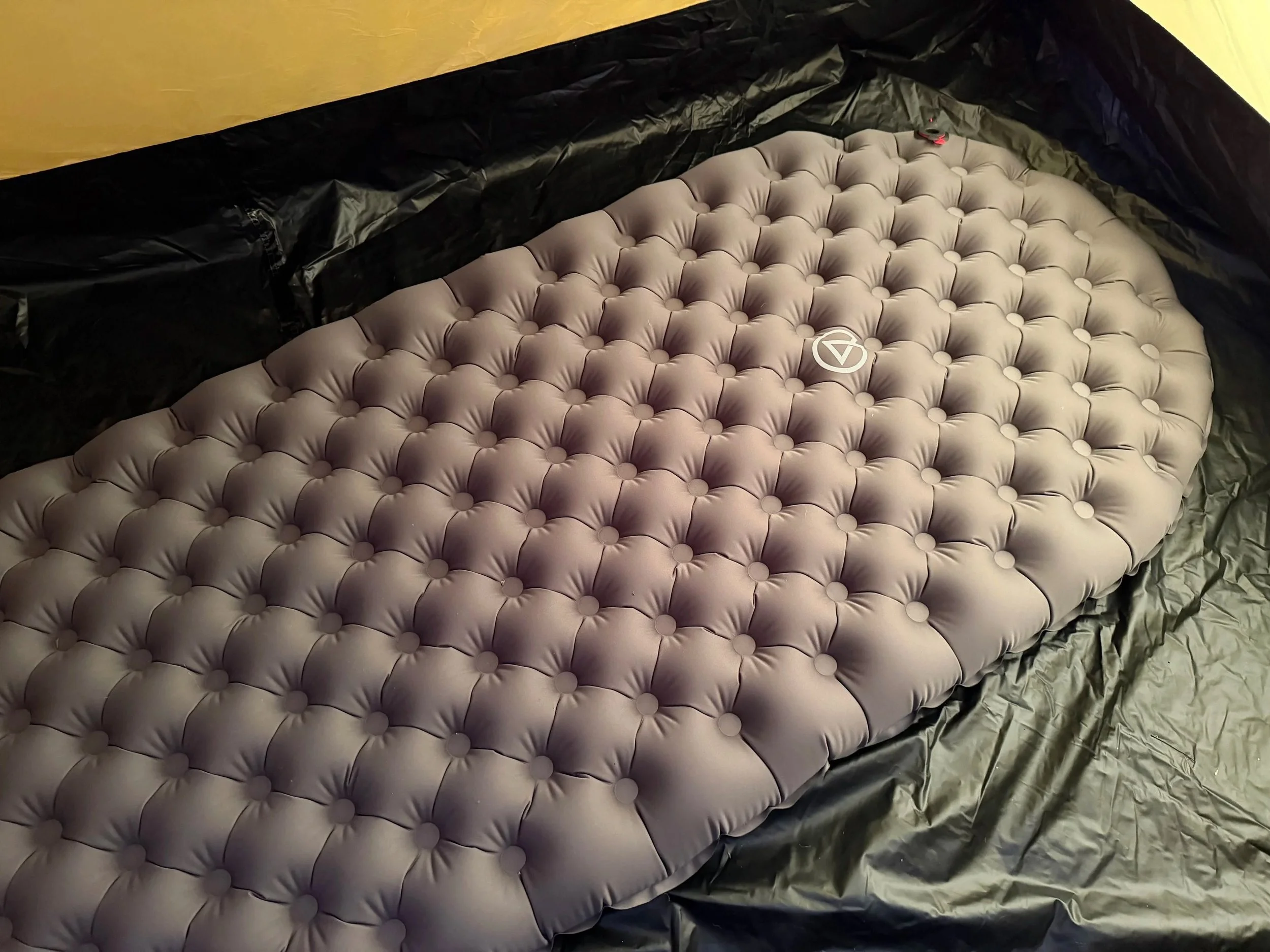
The comfort of a sleeping pad is highly subjective, so I'll keep this section brief. The Zenbivy Flex Air Mattress does an excellent job of prioritizing comfort while still maintaining the weight and packability expected from a backpacking pad. Personally, I've always been a fan of air-dimpled pad designs, and the Flex Air is one of the most comfortable examples I've used.
The stretch-knit top fabric is a standout feature, providing a softer and quieter sleeping surface than many traditional air pads. It also helps eliminate some of the slick, plastic-like feel that is common among lightweight backpacking mattresses. Combined with its generous thickness and supportive construction, the pad does a great job of cushioning pressure points, making it particularly comfortable for side sleepers.
While it isn't the lightest pad on the market, the comfort gains are well worth the modest weight increase. Paired with the Zenbivy sleep system, it creates a sleep setup that feels remarkably bed-like in the backcountry. With its combination of comfort and a 4.8 R value, the Flex Air has become my primary sleeping pad for most of the year. On the coldest winter trips, however, I still prefer a higher-insulation pad with an R value closer to 8.5. I'd love to see Zenbivy expand the lineup with a true winter focused version of this design.
Side Note: Make sure to fully inflate this mattress. It requires more air than you might initially expect. If underinflated, you may bottom out when sitting or lying on it, which can reduce both comfort and insulation performance. When properly inflated, the pad performs as its advertised 4.8 R-value suggests.